
Every Morning, Thousands of Machines Start Running in Jamnagar
Before most Indian cities fully wake up, Jamnagar is already manufacturing.
Furnaces begin melting brass scrap.
Casting units start pouring molten metal.
Extrusion plants push glowing billets through dies.
Tool rooms sharpen inserts.
CNC machines begin humming.
Workers load bars, fittings, fasteners, valves, inserts, and electrical components into baskets.
And somewhere in the middle of this ecosystem, a tea stall becomes an unofficial supply chain office.
This is not one factory.
This is an industrial organism.
Jamnagar runs on interconnected manufacturing layers:
- Raw material traders
- Brass scrap importers
- Casting units
- Extrusion plants
- CNC machining shops
- Plating vendors
- Polish units
- Packaging suppliers
- Transporters
- Export agents
- Tool suppliers
- Chemical vendors
- Small subcontractors operating from 500 sq. ft. workshops
The ecosystem is fast.
Sometimes unbelievably fast.
A buyer can land in Jamnagar and get:
- Samples in 24–48 hours
- Production started within days
- Tooling modified overnight
- Small MOQs accepted without resistance
This flexibility became Jamnagar’s superpower.
But in 2026, flexibility alone is no longer enough.
Because the global manufacturing game has changed.
And this is exactly why why Jamnagar factories are losing competitiveness against China and Vietnam is becoming a serious discussion inside the industry itself.
The Global Manufacturing Shift Nobody in Jamnagar Can Ignore
For years, India believed lower labor cost alone would make it globally competitive.
That assumption is now breaking.
According to manufacturing labor estimates widely referenced across global sourcing reports around 2020:
| Country | Approx. Manufacturing Labor Cost Per Hour |
|---|---|
| China | USD 6.5 |
| India | USD 3.5 |
| Vietnam | USD 3 |
At first glance, India appears cheaper.
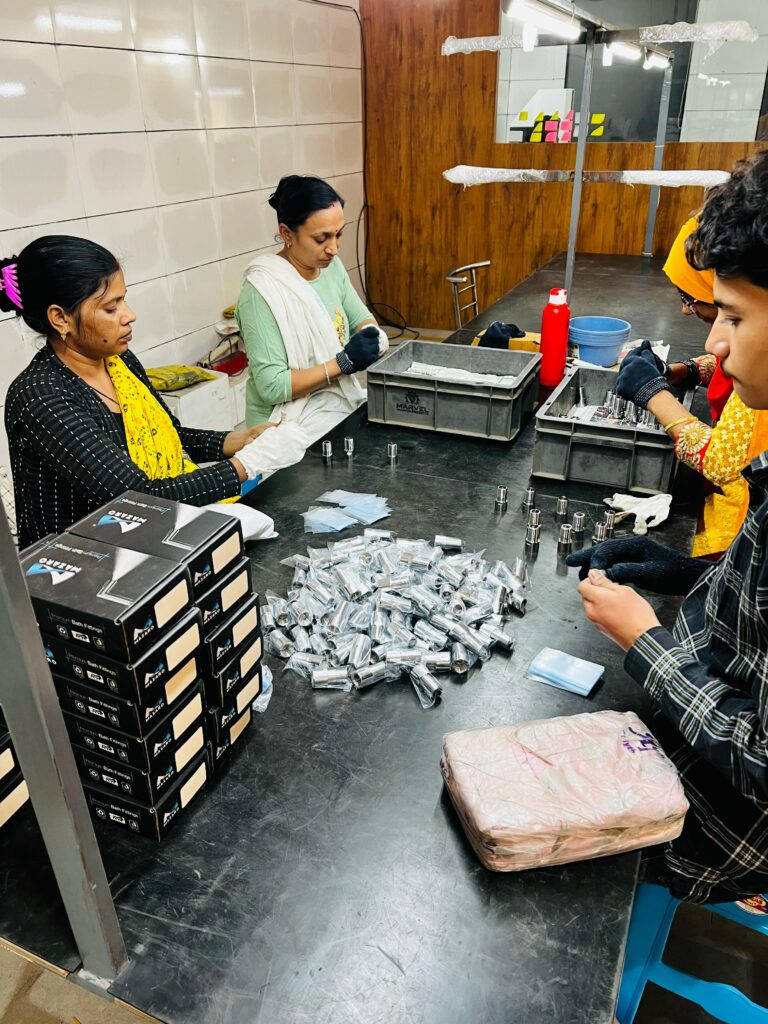
But manufacturing competitiveness is not measured by hourly wages alone.
It is measured by:
- Output per worker
- Production predictability
- Rejection rates
- Process stability
- Lead time consistency
- Documentation accuracy
- Machine uptime
- Tool life optimization
- Supply chain reliability
This is where China changed the game.
China stopped competing only on labor years ago.
Instead, it optimized systems.
And that difference is becoming brutally visible now.
China Invested in Skilled Labor. Jamnagar Optimized for Cheap Labor.
This is one of the hardest truths the industry must accept.
China sees labor as an asset to upgrade.
Many factories in Jamnagar still see labor mainly as a cost to reduce.
That difference changes everything.
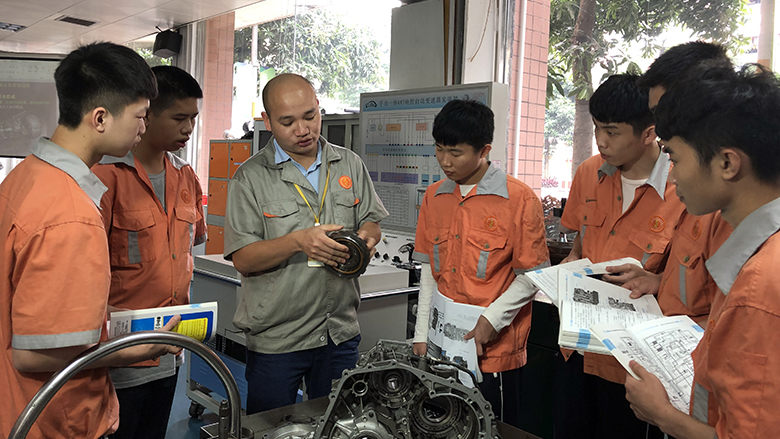
Chinese factories continuously invest in:
- Operator training
- Process documentation
- Automation support
- Digital monitoring
- Lean production systems
- Technical skill development
- CNC programming capability
- Industrial engineering
Meanwhile, many smaller manufacturing clusters in Jamnagar still operate with:
- Minimal SOPs
- Skill dependency on individuals
- Verbal instructions
- Reactive production planning
- Weak documentation systems
The result?
A Chinese operator earning nearly double may still generate significantly higher productive output.
That means:
- Faster cycle times
- Lower rejection
- Better consistency
- Higher OEE (Overall Equipment Effectiveness)
- Lower hidden manufacturing cost
Cheap labor becomes expensive when productivity collapses.
And this is one of the core reasons behind why Jamnagar factories are losing competitiveness against China and Vietnam.
The Dangerous Price War Culture in Jamnagar Manufacturing
One of Jamnagar’s biggest strengths is also becoming one of its biggest risks.
Price flexibility.
In China, many manufacturers operate on structured costing systems:
- Material cost
- Machine hour rates
- Tool wear
- Process overhead
- Rejection allowance
- Margin stability
Because of this, pricing is relatively stable.
If another supplier quotes lower, Chinese factories often refuse irrational reductions.
Their logic is simple:
Unsustainable pricing destroys manufacturing capability.
But Jamnagar operates differently.
A buyer may approach five suppliers.
And one of them may suddenly cut pricing aggressively just to secure the order.
Sometimes below sustainable operational margin.
Why?
Because:
- Machines must keep running
- Cash flow pressure exists
- Market competition is intense
- Short-term survival dominates long-term planning
This creates several chain reactions:
1. Quality Starts Dropping
When margins disappear:
- Inspection reduces
- Tool replacement delays happen
- Preventive maintenance gets ignored
- Skilled workers leave
2. Delivery Performance Collapses
Factories overloaded with underpriced orders begin missing schedules.
3. Supplier Ecosystem Gets Damaged
One delayed vendor affects:
- Plating units
- Packaging suppliers
- Export schedules
- Freight planning
- Assembly timelines
The entire chain becomes unstable.
And global buyers notice this faster than local manufacturers realize.
Systems and Predictability Will Decide the Next Decade
This is probably the single most important manufacturing shift happening right now.
The future belongs to predictable factories.
Not just hardworking factories.
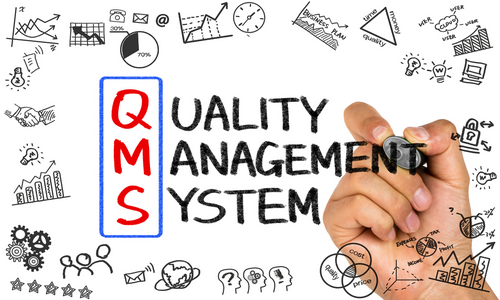
Many medium and large manufacturers in Jamnagar have already started evolving:
- ISO implementation
- ERP adoption
- Traceability systems
- Lean manufacturing initiatives
- Quality process mapping
- Production monitoring
- CAPA frameworks
- Vendor qualification systems
Some are even moving toward:
- Lean Six Sigma
- SPC (Statistical Process Control)
- Digital production dashboards
- IIoT monitoring
- Real-time rejection analytics
This is a major positive sign.
But a huge percentage of micro and small factories still operate without scalable systems.
That was acceptable in 2010.
Not in 2026.
Today’s global buyers expect:
- Batch traceability
- PPAP documentation
- Material certifications
- Stable process capability
- Corrective action reporting
- Lead time accuracy
- Predictable communication
A factory without systems eventually hits a ceiling.
Usually during:
- Large orders
- Export scaling
- Automotive requirements
- Aerospace qualification
- Medical-grade production
- Multi-country supply integration
And once delivery failures begin, scaling stops immediately.
The Real Cost of Loose Production Commitments
This issue rarely gets discussed honestly.
Many factories quote timelines loosely:
- “Sample tomorrow”
- “Dispatch in 3 days”
- “Production almost complete”
- “Material arriving today”
But internally:
- Raw material may not be ready
- Tooling may not exist
- Machines may already be overloaded
- Outside vendors may be delayed
The problem is not delay alone.
The problem is unpredictability.
Because manufacturing supply chains are interconnected.
When one supplier delays:
- Assemblers stop
- Export containers get postponed
- Air freight costs increase
- Customer production lines suffer
- Procurement teams lose confidence
This creates what operations teams call a “cascade disruption effect.”
One weak link damages multiple companies.
And globally, buyers increasingly prefer predictability over cheap pricing.
That is an uncomfortable reality many clusters are still ignoring.
Vietnam Is Quietly Becoming a Serious Threat
Vietnam is not winning because it is dramatically cheaper.
It is winning because it is becoming organized faster.
Global manufacturers shifting to Vietnam often mention:
- Better production discipline
- Faster factory modernization
- Export-focused mindset
- Stable workforce management
- Structured industrial parks
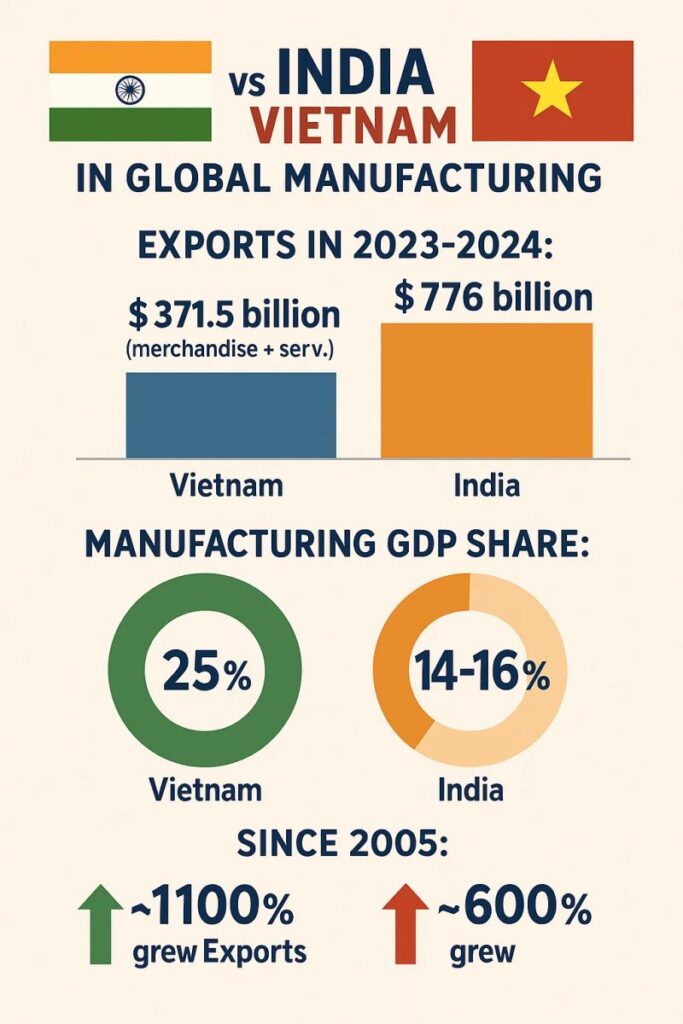
Vietnam also benefits from:
- Aggressive trade agreements
- Strong electronics ecosystem growth
- Increasing foreign investment
- Rapid manufacturing infrastructure development
Meanwhile, India still struggles with:
- Fragmented supplier ecosystems
- Logistics inconsistency
- Skill gaps
- Documentation quality variation
- Power and infrastructure instability in some regions
India still has enormous advantages.
But advantages do not automatically convert into competitiveness.
Execution does.
What Smart Jamnagar Factories Are Already Doing Differently
The good news?
Some manufacturers in Jamnagar already understand this shift clearly.
And they are adapting fast.
The strongest factories are now focusing on:
Process Stability Over Chaos
Instead of chasing every RFQ blindly, they optimize:
- Machine loading
- Repeat business
- Standardized production
- Quality consistency
Documentation Discipline
Global buyers increasingly trust factories that maintain:
- SOPs
- Inspection reports
- Process sheets
- Traceability logs
- Corrective action systems
Technical Sales Instead of Price-Based Sales
This is critical.
Factories winning globally today explain:
- Tolerance capability
- Surface finish control
- Material behavior
- Manufacturability optimization
- Cost engineering logic
Not just price.
Workforce Retention and Training
Smart factories now realize:
- Skilled operators are strategic assets
- Training improves output dramatically
- Retention reduces hidden production instability
The Future Factory Will Not Look Like the Old One
The next-generation manufacturing company in India will operate differently.
It will combine:
- Skilled labor
- Smart systems
- Automation
- Predictable operations
- Digital traceability
- Technical communication
- Engineering-driven sales
Not just low-cost machining.
The future exporter will behave less like a workshop.
And more like an integrated manufacturing system.
That transition is already happening globally.
The only question is:
Who adapts fast enough?
Why This Matters Beyond Jamnagar
This conversation is bigger than one city.
India wants to become a global manufacturing powerhouse.
Initiatives like:
- Make in India
- China+1 sourcing
- Global supply chain diversification
have created a massive opportunity.
But opportunities alone do not build industrial leadership.
Reliable execution does.
If Indian manufacturing wants long-term global trust, factories must move from:
- Reactive → Systematic
- Cheap → Efficient
- Fast → Predictable
- Labor-heavy → Skill-driven
- Informal → Process-oriented
That transformation is not optional anymore.
It is survival.
Final Thought: The Market Will Not Wait
Every day, thousands of machines still start running in Jamnagar.
And that industrial energy remains extraordinary.
But energy without systems eventually creates friction.
The factories that survive the next decade will not necessarily be:
- The biggest
- The cheapest
- The oldest
They will be the most predictable.
Because modern manufacturing is no longer just about making parts.
It is about building trust at scale.
And globally, trust is becoming the most expensive industrial capability of all.
Suggested External DoFollow Links
- ISO Standards Organization
- ASQ – Lean Six Sigma Resources
- World Economic Forum Manufacturing Insights
- McKinsey Manufacturing Research
Bibliography
https://ilostat.ilo.org/topics/wages/
https://www.worldbank.org/en/topic/private-sector-development
https://www.mckinsey.com/capabilities/operations/our-insights
https://www.iso.org/iso-9001-quality-management.html
https://asq.org/quality-resources/lean-six-sigma
https://www.weforum.org/centre-for-advanced-manufacturing-and-supply-chains/
https://www.oecd.org/industry/ind/global-value-chains.htm
https://www.ibef.org/industry/manufacturing-sector-india