
At 8 AM in Jamnagar, while most cities sleep, trucks loaded with brass scrap quietly enter factory lanes.
Some containers come from Europe.
Some from the UAE.
Some from dismantled ships.
Some from old industrial systems in America.
By the time that scrap reaches a brass melting furnace in Gujarat, it may already have changed ownership four or five times.
That is the hidden reality of the Jamnagar brass scrap industry.
Most outsiders see polished brass fittings, precision components, and export-ready parts. What they don’t see is the massive recycled metal ecosystem operating underneath — a supply chain driven by global commodity markets, brokers, freight routes, alloy testing, and industrial survival instincts.
And in 2026, that system is under pressure from every direction.
Jamnagar Runs on Recycled Brass
Jamnagar is not just India’s brass city. It is one of the world’s largest recycled brass manufacturing ecosystems.
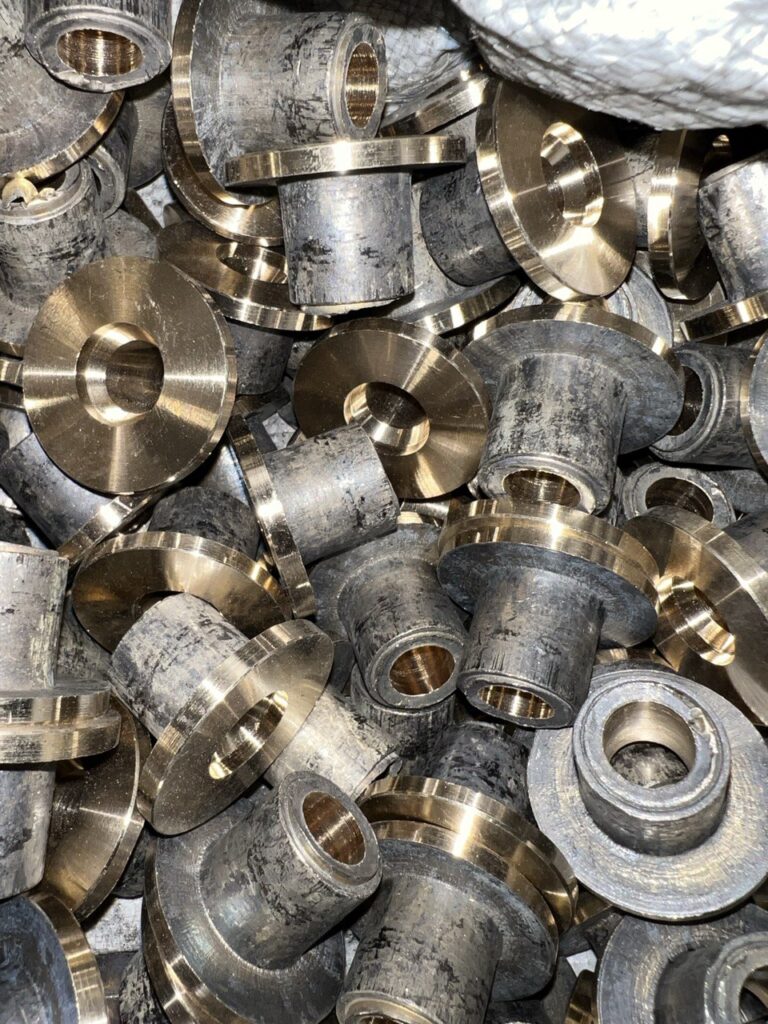
Thousands of factories here produce:
- brass inserts
- plumbing fittings
- electrical connectors
- fasteners
- valves
- precision turned components
- telecom parts
- automotive brass components
But unlike industries dependent on virgin metal mining, Jamnagar largely depends on scrap recycling.
That scrap comes from:
- Europe
- USA
- UAE
- Middle East
- Indian domestic scrap markets
Materials arrive through ports such as:
- Mundra Port
- Kandla Port
- Nhava Sheva Port
And that is where the real complexity begins.
The Scrap Chain Is Bigger Than Most People Realize
A common myth in manufacturing is:
“Importer buys scrap. Factory buys scrap.”
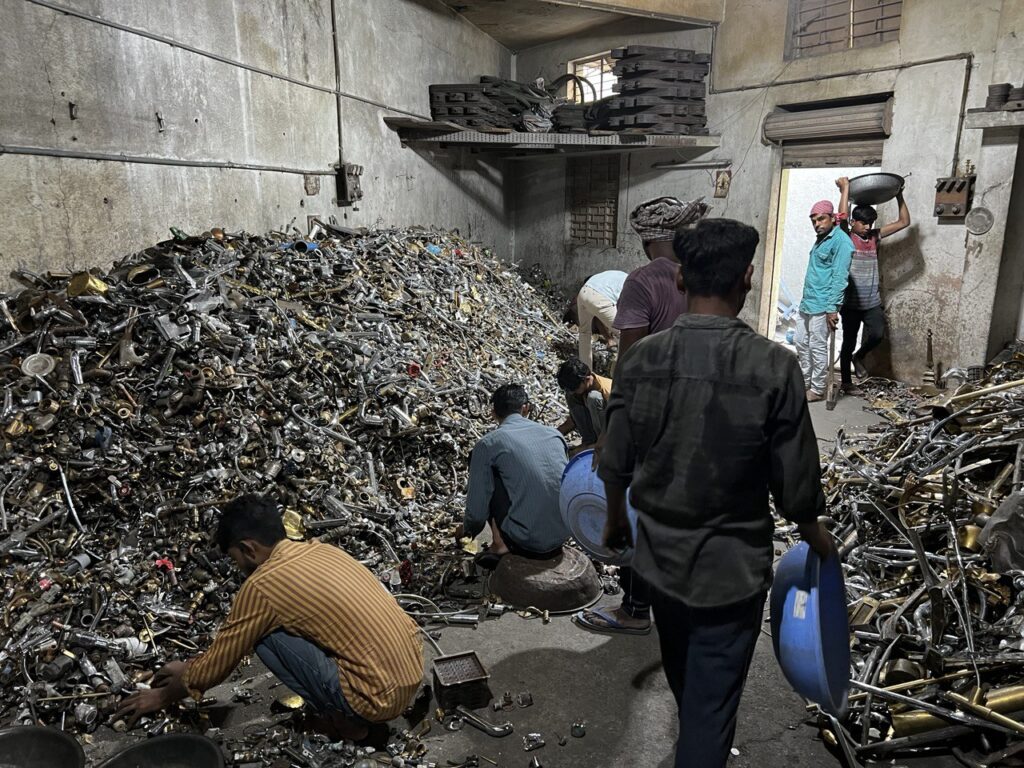
Reality is far more layered. One brass scrap container may move through:
- Importers
- Brokers
- Primary traders
- Secondary traders
- Local stockists
- Scrap sorting units
- Melting plants
- Extrusion facilities
- Machining factories
Sometimes the same container gets sold multiple times before the material is physically unloaded.
Every layer adds:
- commission
- transport costs
- margin pressure
- speculation
- pricing distortion
The result is a highly fragmented supply chain where tracking the original source becomes extremely difficult.
And that creates serious industrial problems.
Why Traceability Has Become a Major Industry Problem
Earlier, buyers mainly focused on:
- price
- dimensions
- plating
- delivery timelines
Today, global customers want much more.
Especially in industries like:
- automotive
- aerospace
- EV
- electronics
- medical devices
Buyers increasingly ask:
- What is the alloy composition?
- Is the material RoHS compliant?
- What impurities are present?
- Was spectrometer testing performed?
- Is the batch traceable?
That becomes difficult when scrap changes hands repeatedly across traders and brokers.
The deeper the trading chain becomes, the harder it is to identify:
- original material source
- alloy consistency
- contamination levels
- previous applications
This is one of the biggest structural weaknesses inside the Jamnagar brass scrap industry today.
Global Wars Are Now Affecting Local Brass Factories
Earlier, brass manufacturers mostly worried about:
- local labor
- machine uptime
- electricity
- production schedules
Now they monitor geopolitics.
Because global conflicts directly affect raw material movement.

- Russia–Ukraine war
- Red Sea crisis
- container shortages
- rising fuel costs
…completely changed international scrap logistics.
Shipping routes became unstable.
Transit times increased.
Freight rates surged.
Container availability tightened.
For factories running on continuous production cycles, even small delays became dangerous.
A delayed scrap shipment can slow:
- melting
- rod production
- machining schedules
- export dispatches
Modern manufacturing is no longer local.
A geopolitical event thousands of kilometers away can now affect a CNC machine running in Jamnagar.
The Red Sea Crisis Changed Freight Economics
The Red Sea disruption became a major turning point for global shipping.
Many vessels began rerouting around Africa instead of using traditional routes.
That increased:
- transit time
- bunker fuel consumption
- insurance costs
- freight charges
For the brass industry, this meant:
- higher raw material costs
- delayed deliveries
- unpredictable planning
- tighter working capital pressure
SMEs suffered the most because smaller factories cannot absorb long inventory cycles as easily as large corporations.
And in a city built heavily on small and medium manufacturing units, that matters.
A lot.
Brass Prices Shocked the Entire Ecosystem
Over the last few years, brass prices moved from nearly:
- ₹350/kg to almost ₹800/kg in several market segments
That single change reshaped the economics of the industry.
The increase was driven by:
- copper price volatility
- zinc fluctuations
- freight inflation
- energy prices
- speculative trading
- dollar movement
And when raw material prices double, the damage spreads everywhere.
Why Rising Brass Prices Hurt Manufacturers
Large factories may survive volatility. Smaller units struggle.
Factories need almost double the cash to maintain inventory.
Holding stock becomes financially risky.
Manufacturers hesitate to lock long-term pricing.
Input cost increases faster than selling prices.
Global buyers compare Indian pricing against multiple countries.
Many factories found themselves squeezed between:
- rising raw material costs
- delayed customer payments
- unstable freight pricing
- competitive export pressure
In manufacturing, profit rarely disappears suddenly.
It erodes slowly through uncontrolled variables.
Alang Still Plays a Huge Role in India’s Scrap Economy
One of the most important contributors to India’s secondary metal ecosystem is Alang Ship Breaking Yard.
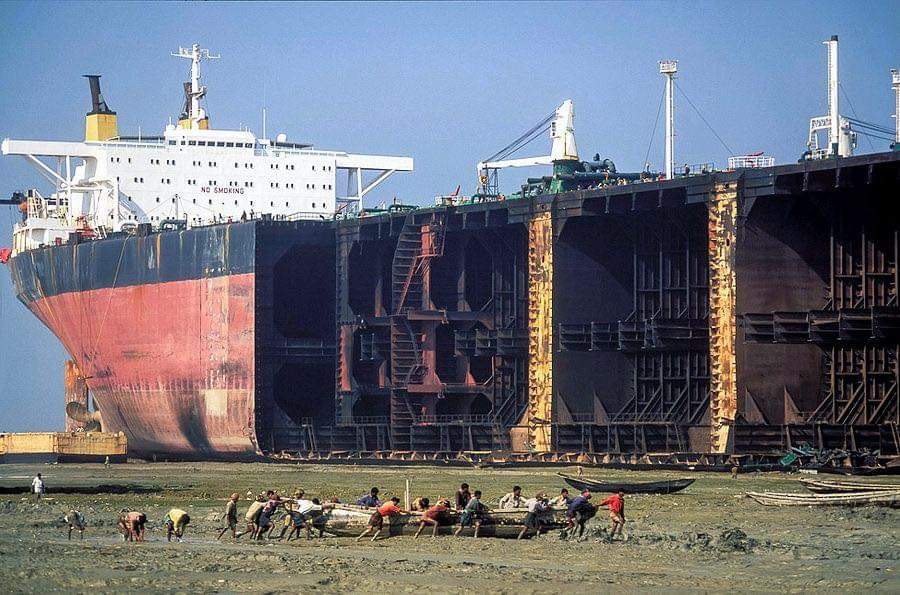
Ships arriving there contain enormous amounts of recyclable metal, including:
- marine valves
- brass fittings
- pumps
- piping systems
- connectors
- industrial assemblies
A portion of this material eventually enters broader brass recycling networks.
But marine scrap comes with technical complications.
Why Alang Scrap Creates Quality Challenges
Ship-breaking scrap is exposed to harsh environments for years.
That often introduces:
- salt contamination
- oxidation
- corrosion
- oil residue
- chemical exposure
- mixed alloy composition
Unlike controlled industrial scrap, marine scrap is rarely uniform.
And inconsistency is dangerous in precision manufacturing.
High impurity material can affect:
Machinability
Tools wear faster during CNC machining.
Surface Finish
Polishing and plating quality drops.
Dimensional Stability
Tolerance consistency becomes difficult.
Porosity
Casting and extrusion defects increase.
Export Acceptance
Rejection risks rise in regulated industries.
This is why advanced manufacturers are investing heavily in material validation systems.
Commodity Markets Now Control Factory Floors
The brass industry is no longer isolated from global economics.
Today, copper prices in London, freight disruptions in the Red Sea, or currency movement in the US dollar can influence local manufacturing decisions in Jamnagar within days.
That is the new reality.
The factory floor is now connected directly to:
- global metal exchanges
- shipping economics
- energy markets
- forex volatility
And manufacturers who ignore that reality operate blindly.
The Industry Is Becoming More Technical
The old manufacturing model based purely on low-cost labor is slowly fading.
Global buyers now expect:
- process control
- documentation
- traceability
- repeatability
- inspection systems
- export-grade quality
As a result, serious manufacturers are modernizing aggressively.
CNC Machining Is Replacing Process Variability
Advanced factories are increasingly using:
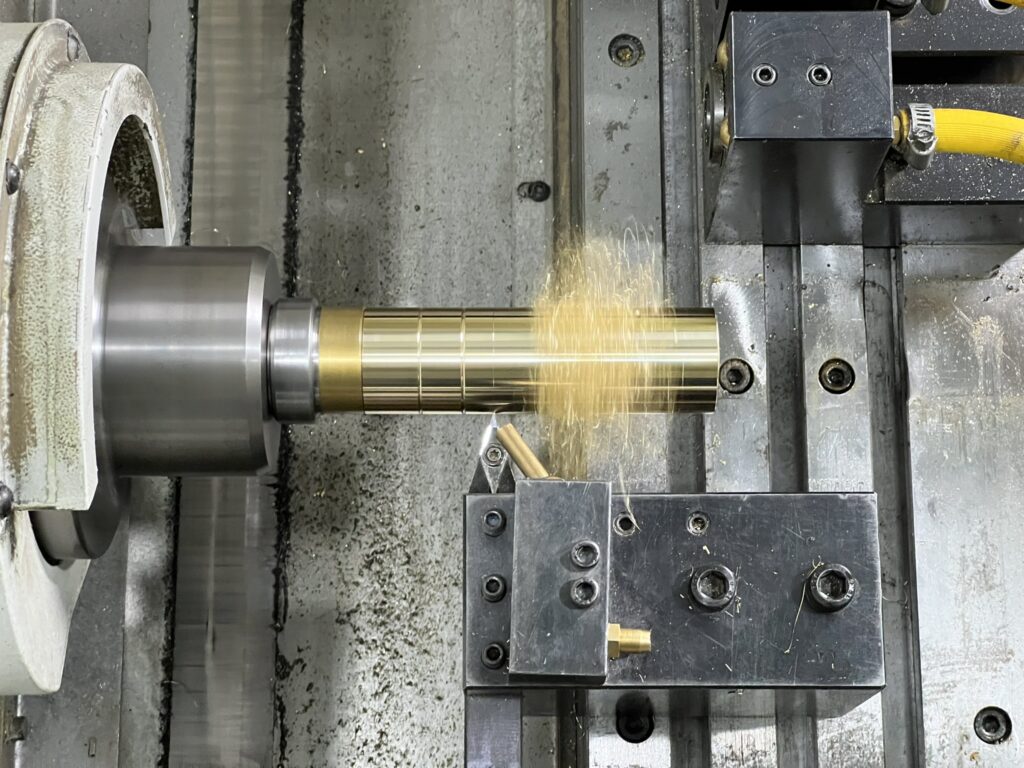
- CNC turning centers
- automated machining systems
- bar feeders
- in-process inspection
- robotic handling systems
This improves:
- dimensional accuracy
- production consistency
- repeatability
- rejection control
The shift is clear.
Manufacturing is becoming process-driven instead of operator-dependent.
Spectrometer Testing Is Becoming Essential
Earlier, alloy identification often depended on experience.
Today, that is no longer enough.
Modern manufacturers increasingly use:
- spectrometer analysis
- alloy verification systems
- batch traceability
- impurity testing
Because one contaminated batch can create:
- plating failures
- machining instability
- customer complaints
- export rejection
The industry is learning an important lesson:
Scrap may be recycled. Quality cannot be recycled.
Is the Jamnagar Brass Scrap Industry Recovering?
Yes. But recovery does not mean stability.
The industry is evolving into a more disciplined manufacturing ecosystem.
Factories are becoming:
- more quality-focused
- more export-oriented
- more technically aware
- more process-driven
At the same time, major structural challenges still remain:
- fragmented trading networks
- supply-chain opacity
- volatile pricing
- freight instability
- working capital stress
The next decade will reward manufacturers who understand both metallurgy and global supply chains.
Not just machining.
The Future Will Belong to Smarter Manufacturers
The future of the Jamnagar brass scrap industry will likely move toward:
Better Traceability
Factories will demand clearer material sourcing.
Controlled Alloy Systems
Impurity management will become stricter.
Automation
Manual variability will reduce further.
Digital Quality Systems
Documentation and inspection records will matter more.
Export-Grade Manufacturing
Consistency will become a competitive advantage.
The industry is moving away from:
“buy scrap and manufacture”
toward:
“engineer controlled manufacturing systems.”
That shift changes everything.
Conclusion
The Jamnagar brass scrap industry is no longer a simple local recycling market.
It is now deeply connected to:
- global wars
- commodity markets
- shipping routes
- energy costs
- export regulations
- industrial automation
A brass fitting manufactured in Jamnagar today may contain recycled metal that once existed inside:
- a European plumbing network
- an American industrial facility
- a dismantled marine vessel
- a Middle Eastern infrastructure project
That is what modern manufacturing looks like. Complex. Interconnected. Relentless. And increasingly technical. The companies that survive the next phase of the industry will not be the ones chasing the cheapest scrap.
They will be the ones mastering:
- traceability
- metallurgy
- process control
- quality systems
- intelligent manufacturing discipline
Because in 2026, brass manufacturing is no longer just about metal.
It is about control.
External Links
https://www.fastmarkets.com/metal-bulletin
https://www.adaniports.com/Ports-and-Terminals/Mundra-Port
https://www.deendayalport.gov.in
https://www.services.bis.gov.in
https://www.mckinsey.com/capabilities/operations/our-insights
https://www.bcg.com/industries/industrial-goods
https://www2.deloitte.com/global/en/industries/industrial-products-construction
https://mbpindia.com/sustainable-brass-manufacturing-in-jamnagar/