
Table of Contents
1. Introduction — When the Tariff Storm Hit, Nobody Was Ready
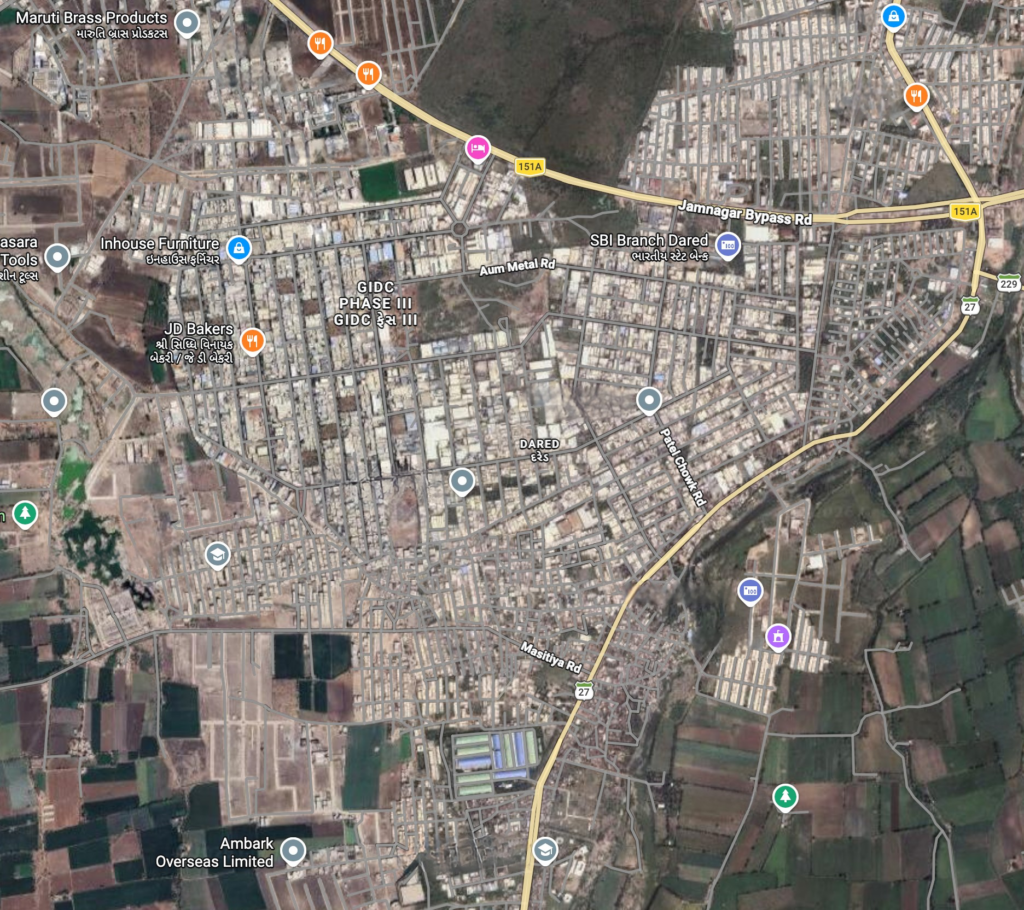
2. Jamnagar: The Brass Capital That Felt It First
2.1 Why Jamnagar Was Especially Vulnerable
2.2 The Immediate Fallout — Orders, Cash & Labour
3. From 50% to 18% — What the India-US Interim Deal Actually Changed
3.1 Relief, But Not Recovery
3.2 How Buyers Changed Their Ordering Behaviour Forever
4. The RFQ Drought — When Customers Simply Disappeared
5. How Jamnagar Manufacturers Are Adapting in 2026
5.1 Pivoting to Domestic Indian Clients
5.2 Chasing EU, Africa, Russia & Taiwan Markets
5.3 Job Work as a Survival Strategy
6. The Grey Zone — Practices Suppliers Are Turning To (And the Risks)
6.1 Misclassification of Products
6.2 Under-Invoicing
6.3 Third-Country Routing
7. What This Means for Global Buyers Sourcing from India
8. Conclusion — The New Normal for Indian Exporters
1. Introduction — When the Tariff Storm Hit, Nobody Was Ready
When the Trump administration announced sweeping tariffs in early 2025, the word “tariff” went from a textbook trade term to something that made factory owners in Jamnagar lose sleep. For Indian precision component exporters — especially those supplying the US market — it wasn’t just a policy shift. It was a bloodbath.
Running orders were slashed. Some were cancelled outright. Customers who had been ordering consistently for years suddenly went silent. The tariff storm didn’t just hurt — it created a deep uncertainty that proved harder to shake than the tariffs themselves.
This blog is not a macro-economics lecture. It is a ground-level account of what actually happened — to real factories, real workers, and real supply chains — and what Indian precision component exporters are doing in 2026 to make sure it never blindsides them like this again.
2. Jamnagar: The Brass Capital That Felt It First
To understand the impact of the tariffs on Indian precision component exporters, you need to understand Jamnagar. Located in Gujarat on India’s western coast, Jamnagar is not just a city — it is an ecosystem. A brass ecosystem.
On any given weekday, you will find foreign buyers — from the US, UK, Germany, Italy — walking factory floors, doing quality audits, and negotiating long-term supply agreements. This is a city where brass is not just made. It is the lifeblood of thousands of families.
2.1 Why Jamnagar Was Especially Vulnerable
Jamnagar’s brass manufacturers had built their entire export model around two primary markets:
- The United States — the largest single buyer of brass fittings, plumbing components, precision machined parts, and specialized components for automotive and industrial machinery.
- The European Union — particularly the UK, Italy, and Germany — consistent buyers of high-tolerance machined components.
When the US market froze, there was no quick substitute. The EU market, while valuable, could not absorb the volume overnight. Jamnagar’s dependence on the American buyer was its greatest strength — until it became its biggest vulnerability.
2.2 The Immediate Fallout — Orders, Cash & Labour
The fallout was swift and brutal. Here is what factory owners experienced within weeks of the tariff announcement:
- Running orders cut by 50% or more — in some cases, closed entirely.
- Cash cycles broke down. EMI payments on machines, factory loans, and equipment financing became difficult to service.
- Skilled labour had to be let go. With no orders to run machines, keeping experienced workers on payroll was not financially viable.
- Industries hit hardest included textiles, seafood, automotive — and brass manufacturing sat squarely in this list.
The damage was not just financial. The confidence of an entire manufacturing cluster — built over decades — was shaken overnight.
3. From 50% to 18% — What the India-US Interim Deal Actually Changed
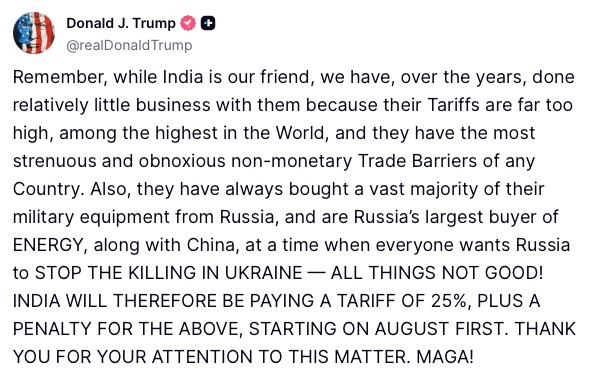
India and the US eventually brokered a temporary agreement that brought the effective tariff rate down significantly. The initial shock had included tariffs reaching as high as 50% — made up of 25% product-specific duties and an additional 25% linked to India’s purchase of Russian oil.
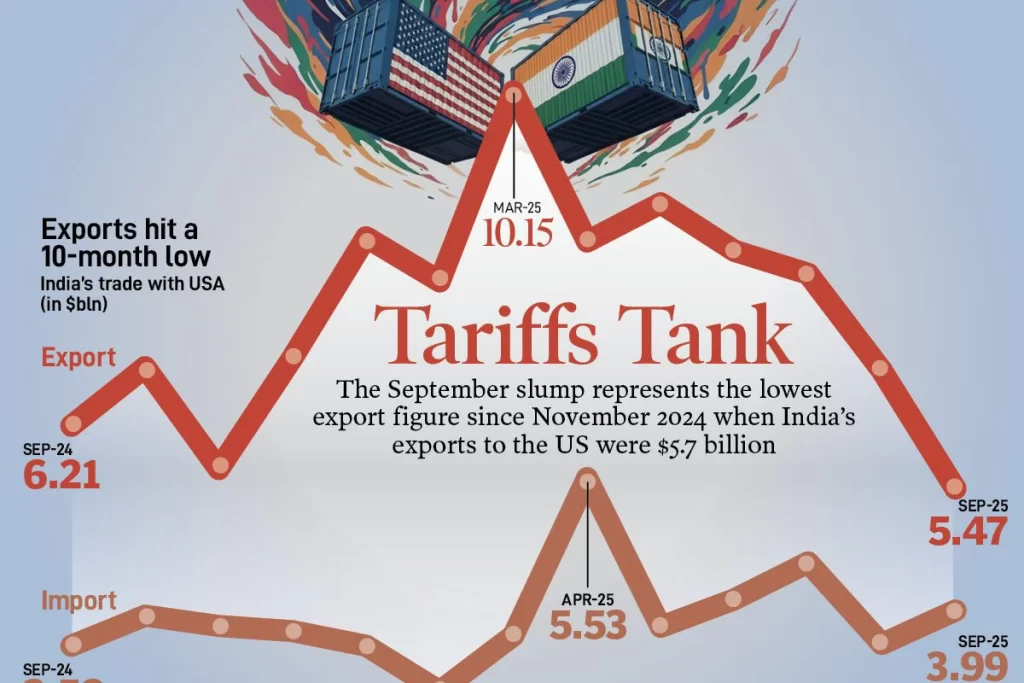
When the rate came down to 18%, suppliers and customers exhaled. But exhaling is not the same as recovering.
3.1 Relief, But Not Recovery
The 18% tariff still changed the final product price meaningfully. Two things happened:
- Suppliers compressed their margins to keep prices competitive, often absorbing losses.
- US buyers also squeezed their own margins to keep the products sellable on the American market.
- The old price points were gone. Selling at pre-tariff prices would have meant losses at the US retail or distribution level.
The economics of the trade relationship had fundamentally shifted — even after the interim deal.
3.2 How Buyers Changed Their Ordering Behaviour Forever
Perhaps the most lasting damage was not to prices — it was to buyer psychology. US customers who previously placed large annual purchase orders completely changed how they bought:
- No more annual orders. Buyers shifted to 3-month rolling orders at most.
- Reasons were stated plainly: ‘We don’t know when the next policy change will come and derail us.’
- Orders were placed only for stock they were confident they could move — no buffer inventory, no optimism buying.
This shift in buying behaviour created an entirely different demand pattern — one that Jamnagar’s manufacturers were not set up to handle efficiently.
4. The RFQ Drought — When Customers Simply Disappeared
One of the starkest indicators of the crisis was what happened to RFQs — Requests for Quotation. These are the lifeblood of any precision component supplier. Without RFQs, there is no pipeline. Without pipeline, there is no future revenue.
One Jamnagar supplier told us: a customer who used to send 30 RFQs in a single week sent zero for more than 3 consecutive months.
The reasons were clear once you looked closely:
- Some US buyers had shifted orders to countries with lower or zero tariff exposure — Vietnam, Mexico, Taiwan.
- Others had begun localising production in the US itself, particularly for parts with high import duties.
- Aluminium and steel component suppliers from Gujarat’s Saurashtra region — including Rajkot — were hit especially hard, as those materials attracted and continue to attract high tariff rates.
The RFQ drought was a signal that demand had not just paused — it had structurally shifted. And structural shifts do not reverse when tariffs ease.
5. How Jamnagar Manufacturers Are Adapting in 2026
Adversity forced Jamnagar’s manufacturers to rethink assumptions they had held for decades. In 2026, the smarter players are not waiting for the US market to return to normal. They are building a new normal — one that is more diversified, more resilient, and less dependent on a single buyer geography.
5.1 Pivoting to Domestic Indian Clients
For the first time, many Jamnagar precision component exporters are aggressively targeting the Indian domestic market. India’s own infrastructure, automotive, and industrial machinery sectors consume enormous volumes of machined metal components.
Job work for local companies — previously seen as low-margin and not worth the focus — is now being viewed as a critical revenue stabiliser. It keeps machines running and workers employed during export demand slumps.
5.2 Chasing EU, Africa, Russia & Taiwan Markets
The EU was always on the radar — but now it is a primary target. European buyers in Germany, Italy, France, and Scandinavia use large volumes of precision brass and machined components. Indian suppliers are now approaching them with competitive pricing and ISO-backed quality credentials.
Other markets now on the active prospecting list include:
- Africa — growing infrastructure investment and manufacturing base.
- Russia — ongoing demand for machined industrial components.
- Taiwan — precision engineering hub with appetite for outsourced components.
None of these markets will replace the US overnight. But together, they reduce the existential dependency that made 2025 so painful.
5.3 Job Work as a Survival Strategy
Job work — manufacturing components to the specification of another company without branding — is now being taken seriously as a business model. It allows factories to utilise capacity, maintain skilled worker retention, and generate cash flow even when export orders are thin.
6. The Grey Zone — Practices Suppliers Are Turning To (And the Risks)
Not every adaptation has been above board. In the desperation to keep orders flowing, some suppliers — and their US customers — have turned to practices that sit in legally dangerous territory. These deserve to be named plainly.
6.1 Misclassification of Products
Some exporters have begun misclassifying their products under HS codes that attract lower tariff rates. A machined brass component that would normally be classified as an industrial fitting gets described differently on the export documentation to reduce the applicable duty.
This is customs fraud. The short-term saving is real. The risk — seizure of goods, blacklisting by US Customs (CBP), and criminal liability — is equally real.
6.2 Under-Invoicing
Declaring a lower transaction value than the actual sale price reduces the customs duty calculated on import. This practice — under-invoicing — was reportedly accepted by some US buyers who were also looking for ways to reduce their landed cost.
Both the exporter and the importer carry legal exposure here. US Customs enforcement has sophisticated price benchmarking tools. Flagged shipments invite audits — and audits can go back years.
6.3 Third-Country Routing
Some suppliers have explored importing components from other countries — countries with more favourable tariff treatment — to change the country of origin designation on the final product. This is sometimes called tariff evasion through transshipment, and it is explicitly prohibited under US trade law.
The bottom line: these grey-zone approaches offer short-term relief at the cost of long-term supplier credibility and legal standing. Any serious buyer — especially in aerospace, defense, or medical devices — will not work with a supplier whose compliance record is questionable.
7. What This Means for Global Buyers Sourcing from India
If you are a procurement manager, an engineering director, or a sourcing decision-maker evaluating Indian suppliers right now — here is what the tariff crisis has actually revealed:
- India’s precision component manufacturing capability is intact. The crisis did not destroy quality or capacity — it tested it.
- Supplier diversification is no longer optional. The manufacturers who survived the tariff storm were the ones with multiple market touchpoints.
- Compliance matters more than ever. Buyers sourcing for regulated industries (aerospace, medical, defense) must actively verify that their Indian suppliers are not using grey-zone practices that could create legal and supply chain risk for them.
- The 18% tariff, while lower than the crisis peak, is a permanent feature of the landscape — at least for the foreseeable future. Buyers should factor this into TCO (Total Cost of Ownership) calculations, not treat it as a temporary surcharge.
- Shorter order cycles are the new relationship norm. Indian suppliers now expect 90-day rolling orders rather than annual commitments. Buyers who can work with this structure will find better pricing and faster response.
8. Conclusion — The New Normal for Indian Exporters
The US tariff situation of 2025 was a wake-up call. Not just for Jamnagar’s brass cluster — but for India’s precision component export industry as a whole.
The manufacturers who will come out stronger are not the ones waiting for things to go back to the way they were. They are the ones who have accepted that the old normal is gone — and are building something more robust in its place.
Market diversification. Domestic pivots. Compliance discipline. Shorter order cycles. These are not crisis responses — they are permanent upgrades to how Indian precision component exporters operate.
For global buyers, the message is equally clear: India’s manufacturing capability is not going away. But the terms of engagement have changed. The buyers and suppliers who build honest, flexible, and compliant partnerships in 2026 will be the ones with the most resilient supply chains by 2030.
— DoFollow External Link Opportunities —
• US CBP (Customs & Border Protection) — https://www.cbp.gov — in Section 6
• ISO Standards (ISO 9001 / AS9100) — https://www.iso.org — in Section 7
• WTO Tariff Data — https://www.wto.org — in Section 3